
Reconstructive Surgery
Plastic reconstructive surgery consists of a series of procedures to rejuvenate or improve the function of a particular body part impacted by a traumatic injury, ageing, illness or a congenital abnormality.
-
SURGICAL RECONSTRUCTION AFTER A TRAUMATIC ACCIDENT
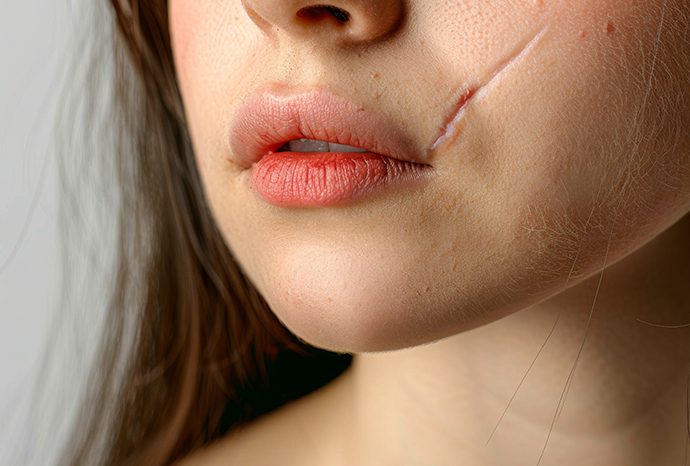
Plastic reconstructive surgery following a motor vehicle accident may be extensive, depending on the severity of damage to the skin, soft tissue and bone. Each case is unique and requires an individualized approach to restore the function and aesthetic appeal of the impacted area. Various surgical techniques such as scar revision, bone reconstruction and tissue grafts are employed, tailored to each patient, to correct facial or body disfigurement caused by the accident.
-
THE VITAL ROLE OF MEDICAL PROFESSIONALS IN SURGICAL CORRECTION OF BURNS AND SCARS
While minor, first-degree burns may leave little to no scarring, it's crucial to note that more severe, second or third-degree burns can result in significant scarring, necessitating surgical correction.Burns can lead to scarring such as:
- Hypertrophic scars appear elevated, purple or red and may be warm and itchy.
- Contracture scars severely limit mobility due to tightening of the muscles, skin and tendons.
- Keloids are smooth, shiny bumps, which are abnormal formations of scar tissue that appear from an injury to the skin.
-
SKIN GRAFTS
Skin grafts are commonly utilised to treat the damage left behind from burns. After performing debridement by removing all the necrotic tissue, the surgeon extracts a fine layer of skin from an unaffected, unburnt region of the skin and repositions it to the burn wound. A split or full-thickness graft is used, which is characterised by the density of the dermis removed.
-
TISSUE EXPANSION
Tissue expansion is a technique that helps to create extra skin for reconstructive purposes. It involves placing a medical balloon under the skin near the area that needs treatment. The balloon is gradually filled with a solution, which stretches the skin. The extra skin that's created can then be used to repair the burn site.
-
FREE FLAP
Free flap surgery consists of procedures to correct expansive wounds and substitute for injured muscle, skin and bone. A free flap refers to donor tissue taken further from the operative site, which is reattached to a new blood supply in the injured area.
-
SCAR MANAGEMENT
Depending on the type and severity of the scar, there are various ways to manage it, including physical therapy, physiotherapy, taping, pressure garments, splints, and silicone sheeting.
-
CLEFT LIP AND PALATE SURGERY
Cleft lip and palate repair is surgery to correct a congenital abnormality, such as a cleft lip and palate present at birth. A cleft lip, a noticeable split in the lip or a split that runs from the upper gum to the nostril, can be surgically corrected, restoring facial symmetry. A cleft palate, on the other hand, is an opening in the roof of the mouth that develops while the foetus is still forming in the womb, highlighting the need for early intervention. Cleft palate repair involves constructing a functional palate, minimising the risk of complications from the defect.
FREQUENTLY ASKED QUESTIONS
1Do burn wounds always need to be reconstructed?
When a burn causes extensive damage that cannot heal on its own, surgical intervention becomes crucial. Our goal is to restore function and appearance, providing the best possible outcome for our patients.
2When should you perform cleft lip and palate repair?
Cleft lip repair is most effective when performed between three to six months of age, while cleft palate repair is typically scheduled between nine to twelve months from birth. Understanding these timelines can help you plan and prepare for the best possible outcome for your child.
3What types of surgical techniques are used for trauma reconstructive surgery?
The answer is not always straightforward, as it depends on the type and severity of the wound. However, you can rest assured that our skilled surgeons are adept at using various methods, including skin grafting and flaps, to rebuild the affected area.

OUR SERVICES


